
Scandinavian Kitchen Interior Design: The Complete, In‑Depth Guide to a Calm, Functional, and Beautiful Nordic Space
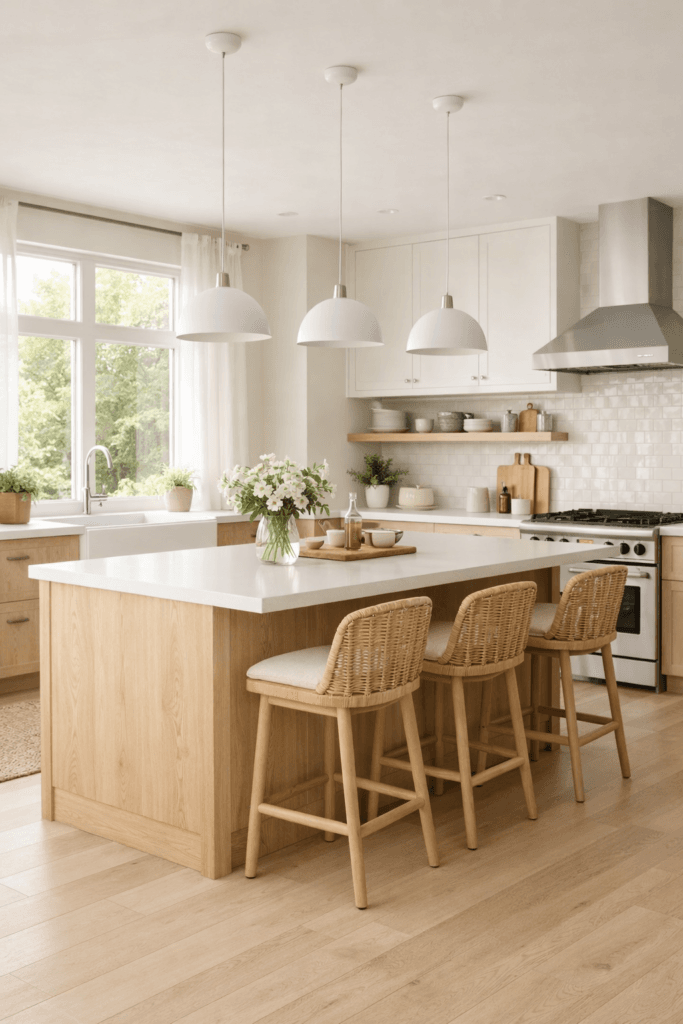
Scandinavian kitchen interior design has become one of the most desired aesthetics in modern homes. Its clean lines, natural textures, and warm minimalism create a space that feels both timeless and deeply comforting. Whether you’re renovating, building from scratch, or simply refreshing your kitchen, the Scandinavian approach offers a perfect balance of beauty, practicality, and serenity.
This comprehensive guide explores every element of Scandinavian kitchen design — from color psychology and materials to layout planning, lighting strategy, and decor styling.
What Makes a Kitchen “Scandinavian”?
A Scandinavian kitchen is built on three core principles:
1. Simplicity
Clean lines, uncluttered surfaces, and a minimalist approach to decor.
2. Functionality
Every element must serve a purpose — storage, workflow, lighting, and layout are carefully considered.
3. Natural Warmth
Wood, stone, soft textiles, and organic shapes bring comfort to the minimalist structure.
This combination creates a kitchen that feels bright, airy, and effortlessly stylish, even in small spaces.
1. Scandinavian Kitchen Color Palette: The Psychology Behind the Tones
Color is the foundation of Scandinavian design. Nordic countries have long winters and limited daylight, so interiors are intentionally bright and reflective.
Primary Scandinavian Colors
White: maximizes light and creates visual openness
Soft gray: adds depth without heaviness
Beige & cream: warm, cozy alternatives to stark white
Light wood tones: oak, ash, birch, pine
Black accents: used sparingly for contrast
Why these colors work
They visually expand small kitchens
They create a calm, uncluttered atmosphere
They pair well with natural materials
They allow decor and textures to stand out subtly
Trending Scandinavian color combinations
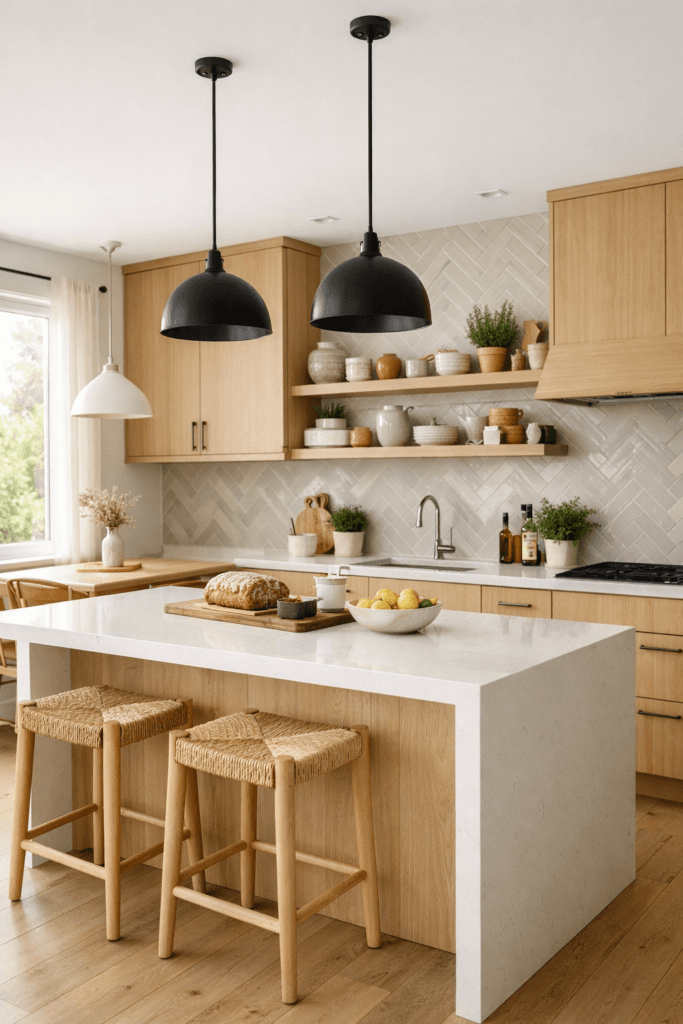
White + natural oak
Warm beige + cream cabinetry
Gray + matte black hardware
Greige + stone countertops
2. Materials That Define Scandinavian Kitchen Design
Scandinavian interiors celebrate nature. Materials are chosen for their texture, durability, and organic beauty.
Essential Scandinavian Materials
Wood
Used for:
Cabinets
Flooring
Open shelving
Countertops
Dining furniture
Popular species:
Oak
Birch
Ash
Pine
Wood adds warmth and prevents the space from feeling too minimal or cold.
Stone
Used for:
Countertops
Backsplashes
Islands
Accent walls
Common choices:
Quartz
Marble
Soapstone
Honed granite
Stone introduces natural texture and subtle pattern.
Matte Finishes
Matte surfaces are a Scandinavian signature:
Matte cabinets
Matte black or brass hardware
Matte appliances
They reduce glare and create a soft, modern look.
Textiles
Soft materials balance the clean lines:
Linen curtains
Cotton towels
Woven rugs
Wool cushions for dining benches
3. Scandinavian Kitchen Layouts: Function First
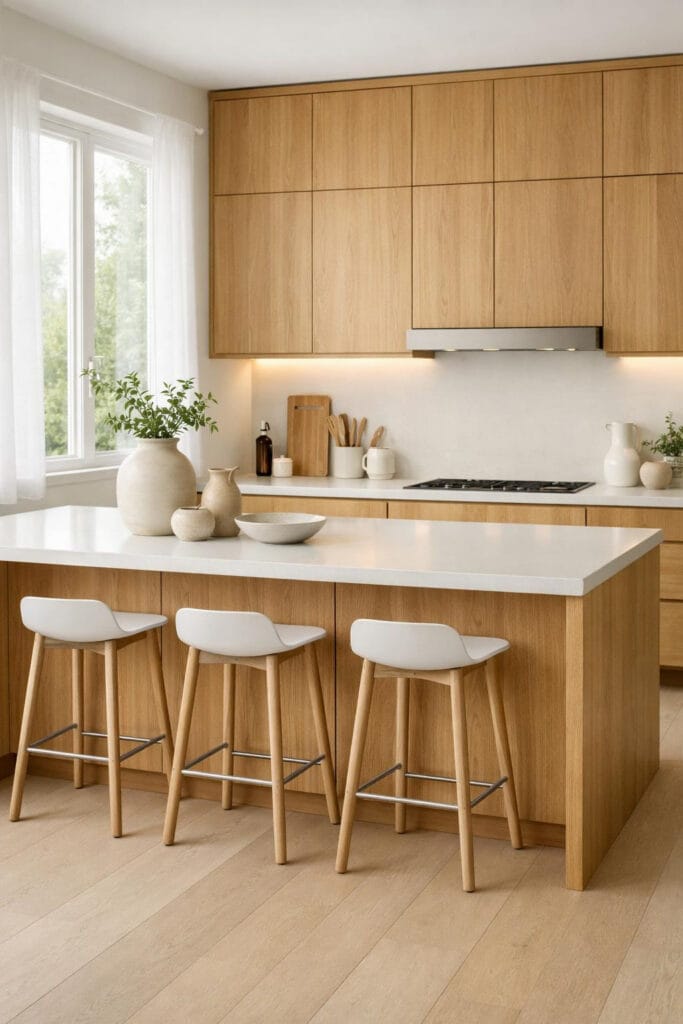
Scandinavian kitchens are designed for efficiency and flow. The layout must support cooking, cleaning, and socializing without clutter.
Most Common Scandinavian Layouts
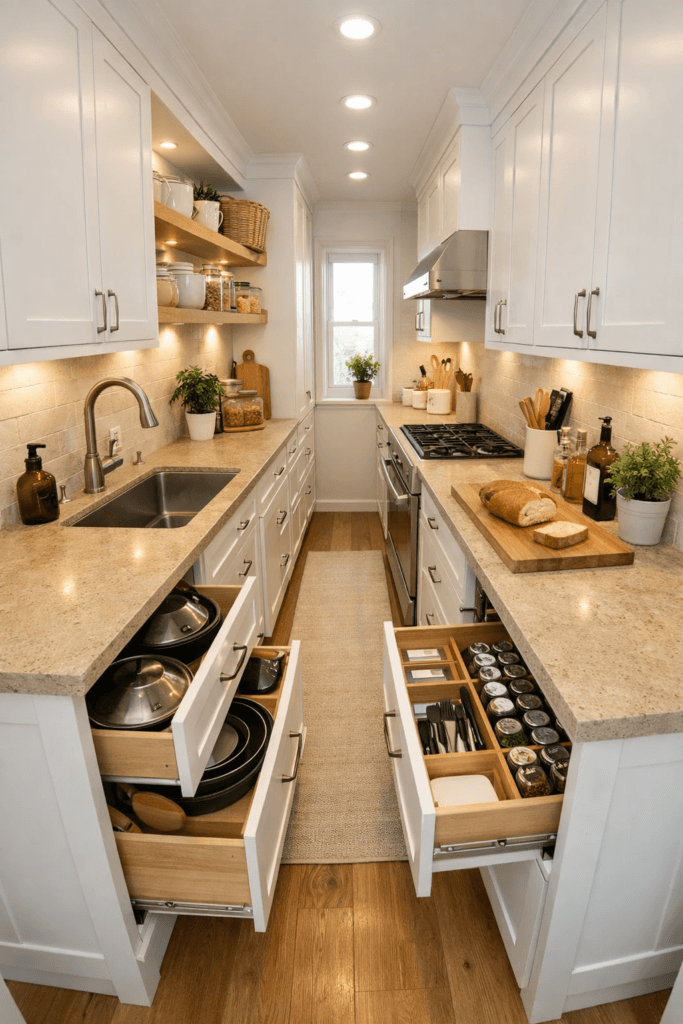
Galley Kitchen
Perfect for small apartments
Clean, symmetrical lines
Easy workflow
Works beautifully with white or light wood cabinetry
L‑Shaped Kitchen
Ideal for open‑concept homes
Allows for a dining area or island
Creates a natural cooking triangle
U‑Shaped Kitchen
Maximum storage
Great for families
Works well with mixed materials (wood + white)
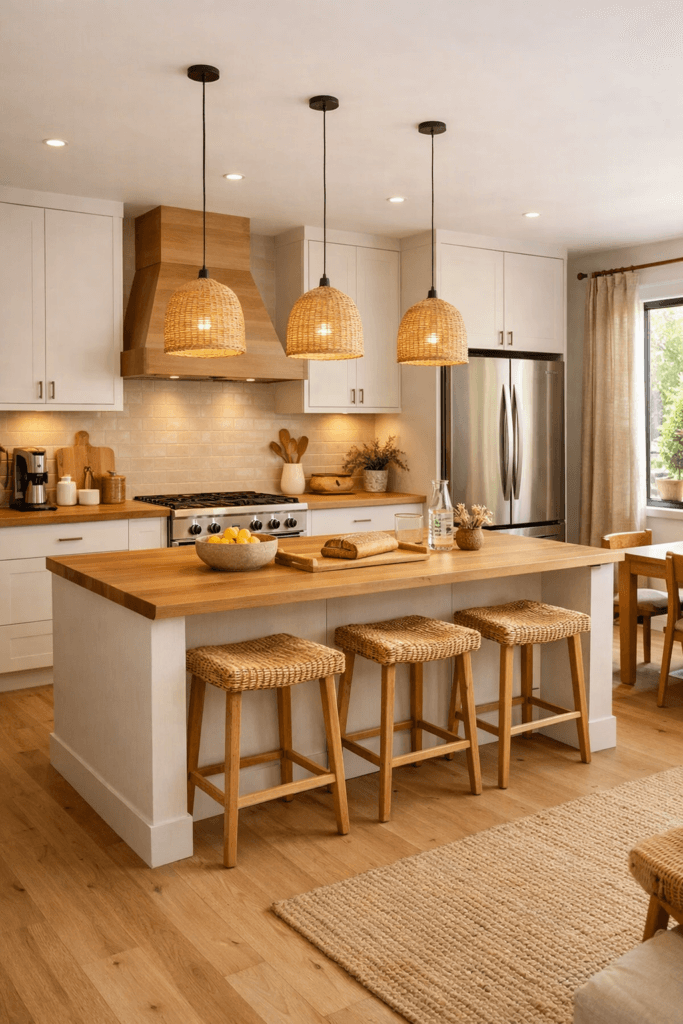
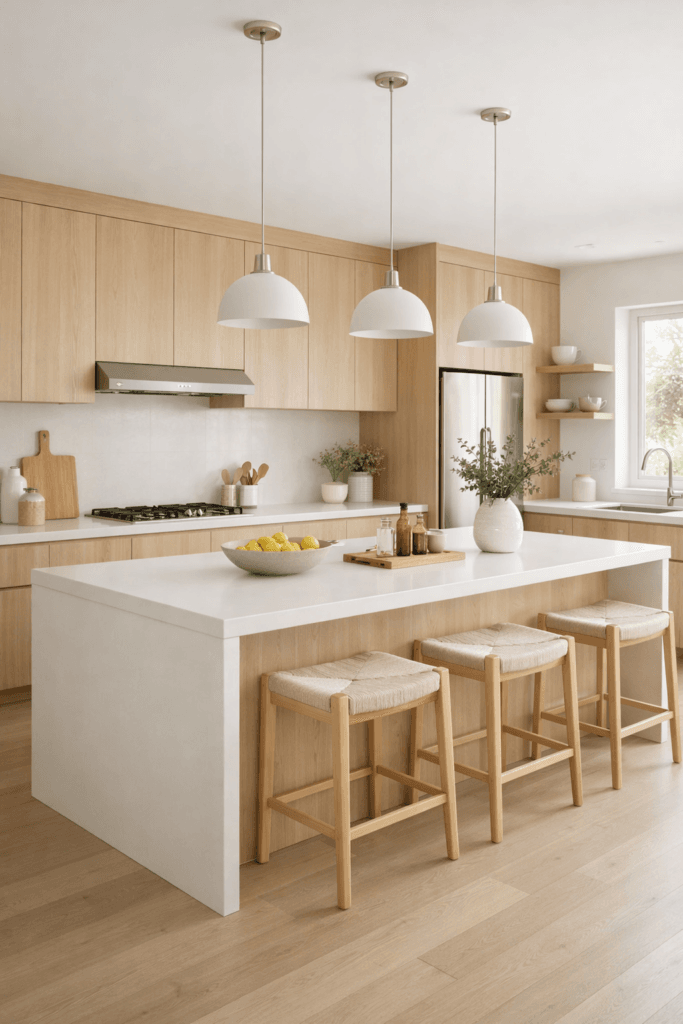
Kitchen with Island
Adds workspace
Creates a social hub
Perfect for pendant lighting
Allows for bar seating
Small Scandinavian Kitchens
Small spaces thrive with:
Vertical storage
Open shelving
Light colors
Slim hardware
Integrated appliances
4. Lighting: The Heart of Scandinavian Kitchen Design
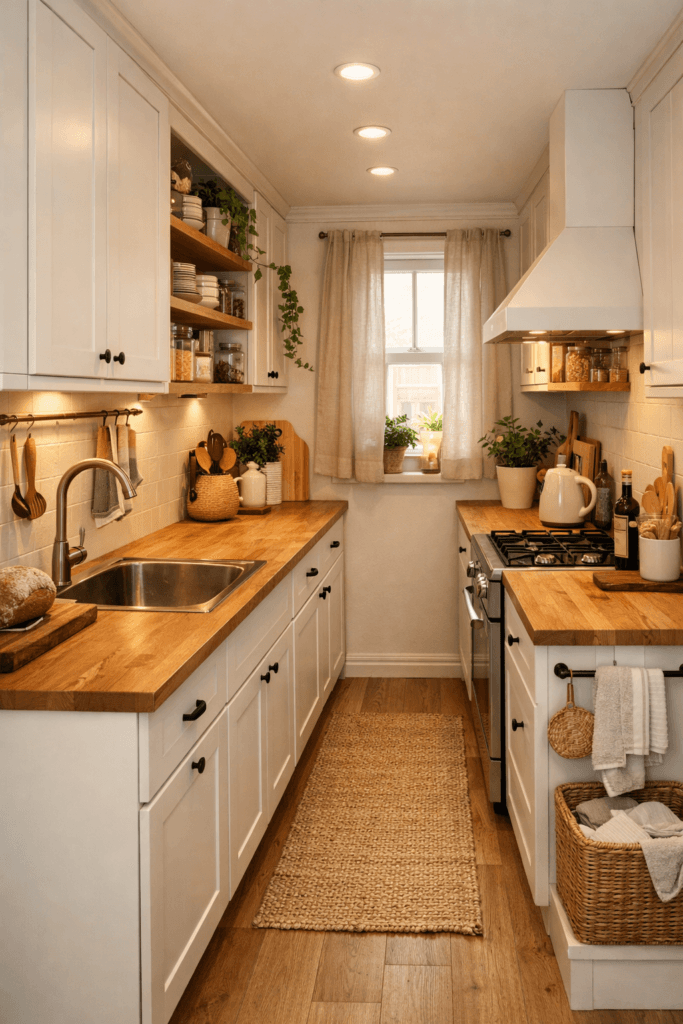
Lighting is one of the most important elements in Nordic interiors. Because natural daylight is limited in Scandinavian countries, lighting is layered and intentional.
Three Layers of Scandinavian Lighting
1. Ambient Lighting
Soft, diffused light that fills the room Examples:
Ceiling fixtures
Recessed lights
Large windows
2. Task Lighting
Focused light for cooking and prep Examples:
Under‑cabinet LED strips
Pendant lights over the island
Adjustable wall sconces
3. Accent Lighting
Adds warmth and atmosphere Examples:
Warm bulbs
Glass pendants
Candle‑style lights
Shelf lighting
Lighting Temperature
Scandinavian kitchens use warm white (2700K–3000K) to create a cozy glow.
5. Scandinavian Kitchen Cabinets & Storage Solutions
Storage is essential in Scandinavian design. The goal is to keep surfaces clear and the space visually calm.
Cabinet Styles
Flat‑panel doors
Handleless cabinets
Slim black or brass hardware
Matte finishes
Light wood cabinetry
Smart Storage Ideas
Deep drawers for pots and pans
Pull‑out pantry systems
Corner carousel units
Hidden trash bins
Vertical spice racks
Integrated appliances
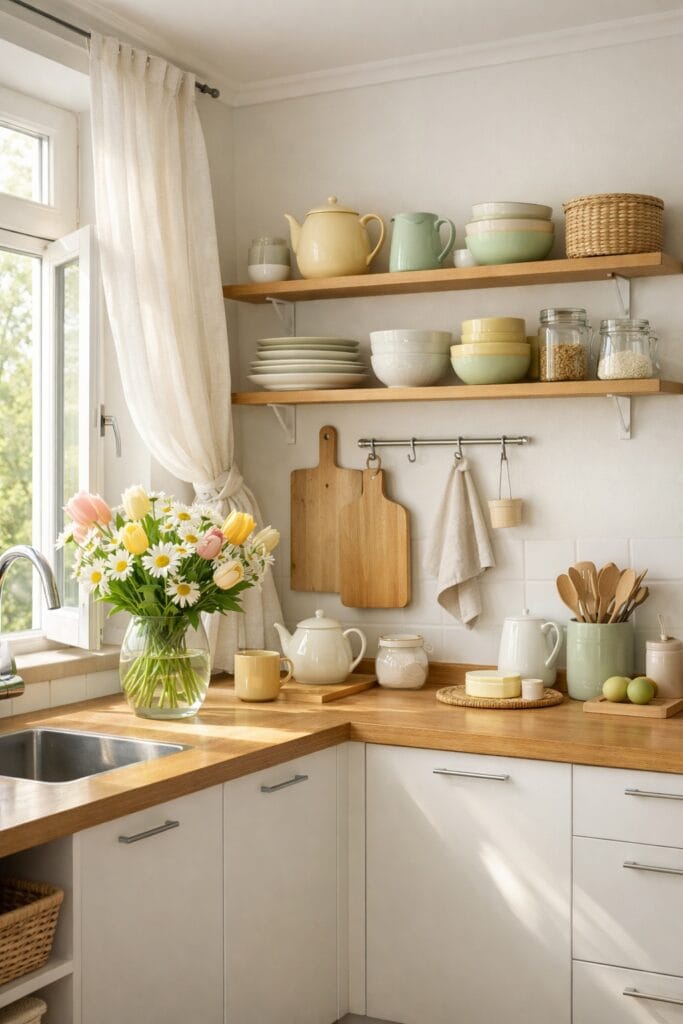
Open Shelving
Used sparingly to display:
Ceramics
Wooden cutting boards
Glass jars
Plants
Open shelves add personality without clutter.
6. Scandinavian Kitchen Decor & Styling: Minimal but Warm
Decor in Scandinavian kitchens is simple, intentional, and nature‑inspired.
Top Scandinavian Decor Elements
Ceramic vases with organic shapes
Wooden cutting boards
Neutral-toned textiles
Herb plants or eucalyptus
Woven baskets
Stoneware dishes
Minimalist wall art
Soft, textured rugs
How to Style a Scandinavian Kitchen
Keep counters mostly clear
Group decor in small clusters
Mix textures (wood + stone + linen)
Use greenery for freshness
Choose functional decor (bowls, jars, boards)
7. Scandinavian Kitchen Trends for 2026
Scandinavian design evolves while staying true to its roots.
Current Trends
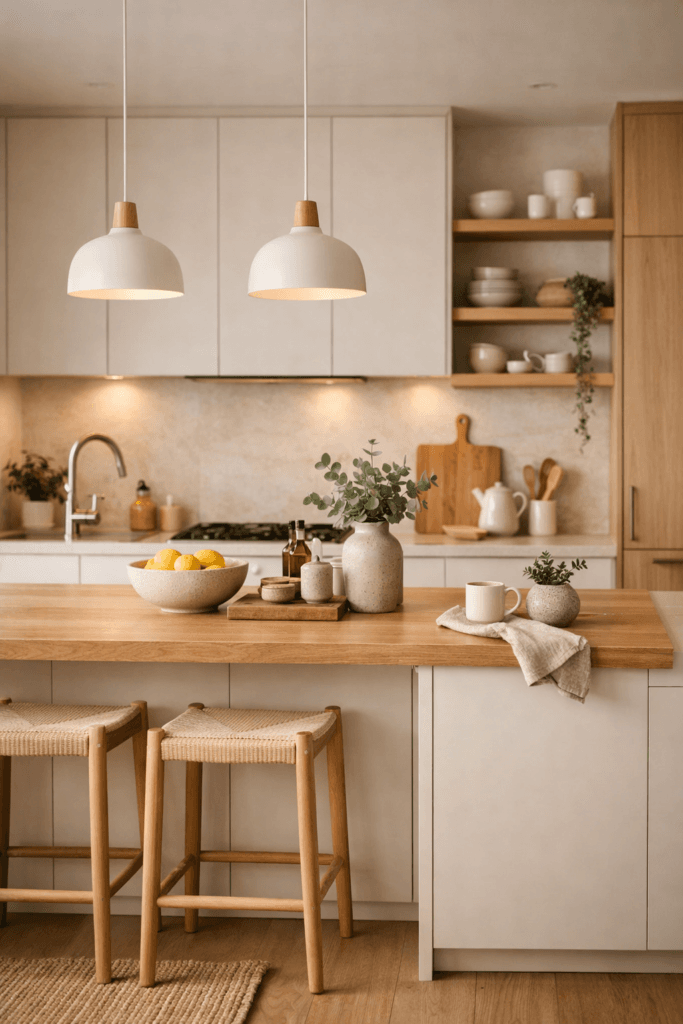
Warm neutrals replacing stark white
Textured stone backsplashes
Organic, curved shapes
Mixed wood tones
Fluted cabinets
Integrated lighting
Eco‑friendly materials
Beige and greige cabinetry
8. Practical Tips for Creating a Scandinavian Kitchen
If you’re renovating:
Choose matte finishes for a modern look
Invest in good lighting
Keep the color palette simple
Prioritize storage solutions
Use natural materials whenever possible
If you’re decorating on a budget:
Add wooden cutting boards
Replace hardware with matte black or brass
Add linen textiles
Declutter countertops
Add plants or herbs
Use warm LED bulbs
If you have a small kitchen:
Use white or light wood
Add mirrors or glossy tiles to reflect light
Choose open shelving
Use slim furniture
Keep decor minimal
Final Thoughts
A Scandinavian kitchen interior is more than a design trend — it’s a lifestyle rooted in simplicity, comfort, and intentional living. By combining natural materials, thoughtful lighting, functional layouts, and warm minimalism, you can create a kitchen that feels calm, beautiful, and timeless.
If you immediately felt like decorating your home in Scandinavian style.
Start here : Best Amazon Scandinavian Kitchen Ideas
See more Scandinavian Kitchen Ideas? Click here!